
I see so much value in both the ethos of organic farmers and in many organic farming practices. Organic agriculture can and should be a powerful tool for the health and flourishing of all living things. I see the challenges that face both our farms and ecosystems as an opportunity for us to support practical solutions that reach for the resilience of both.
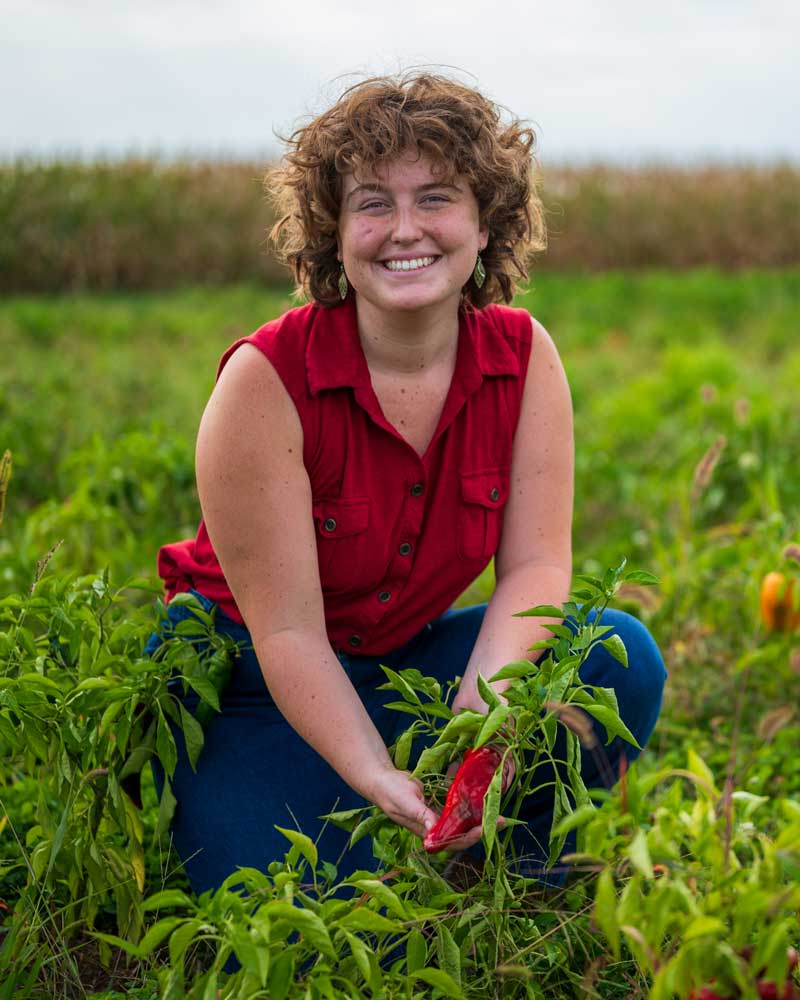
BIO
Ari Abbrescia, Organic & Sustainable Agriculture Outreach Specialist
UW-Madison Extension-Crops & Soils
Education
B.S. in Biology, Villanova University, 2021
M.S. in Agroecology, UW-Madison, 2023
Research Interests
Specializes in organic fruit and vegetable pest management, grower resource development, technical support for organic transition and production.
Personal Interests
Painting, cooking/baking, writing poetry, gardening, and making foraged tea blends!
Hometown:
Madison, Wisconsin.
Tell us a little bit about your program (research/teaching):
I work with University of Wisconsin-Madison Extension as an Organic & Sustainable Agriculture Outreach Specialist. My work supports organic-curious, transitioning, and experienced organic farmers by sharing research, developing resources and tools, and creating opportunities for connection across the Wisconsin organic community. Right now, my days are full of writing articles and guides for organic fruit and vegetable growers, hosting field days with organic graziers, and taking phone calls from farmers with questions about organic certification and production.
As Wisconsin’s first Organic & Sustainable Agriculture Outreach Specialist, what do you see as the biggest barrier farmers face when considering the switch to organic, and how do you help them overcome it?
Wow, there are so many things I could share here. I think it depends on where someone is at in their farming career – a new farmer wanting to farm organically is going to face different challenges than someone who has been farming for 20 years. Fruit growers will face different production challenges from folks who graze livestock. I take those differences into account when I’m making programming for different farmers.
That being said, one of the bigger challenges to transition that I’ve seen is something that impacts farmers across the board: the logistics and cost of organic certification. The task of understanding and aligning with organic standards, the recordkeeping requirements, the different options for certifiers and fee structures and cost-share opportunities—it can feel unfamiliar and overwhelming. So this is where I’ve started; I’m working to create and connect farmers with resources that simplify the process. I’m also finding opportunities to platform experienced organic growers who have made this system work for their operation, so that they can share their stories and tips for success.
Your research focused on disease management in organic vegetable crops – what’s one lesson from your graduate work that you find yourself sharing most often with transitioning farmers?
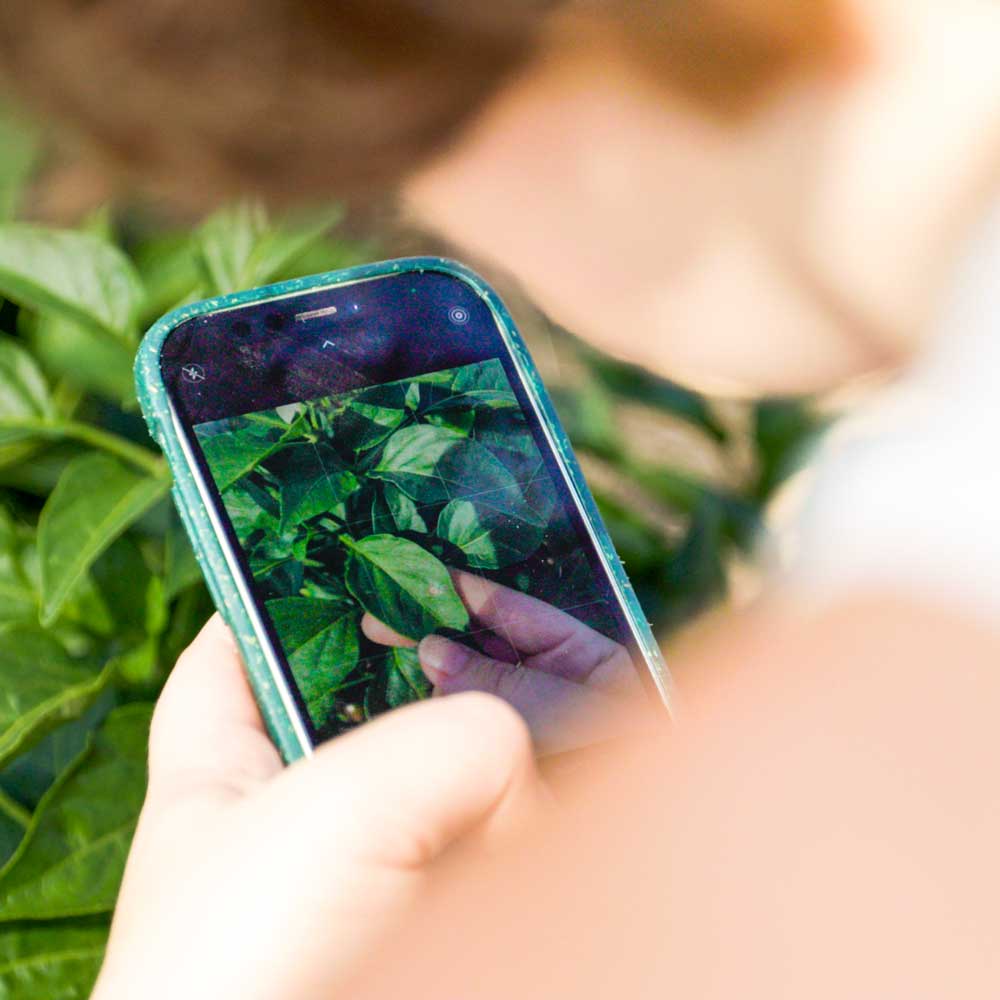
The biggest lessons I learned: getting to know your problem pests and taking an integrated approach is critical for successful organic pest management! Many of the folks I work with on organic pest and disease challenges are beginning farmers. For them, I think it’s critical to start building your system around the foundational building blocks of integrated pest management, instead of relying on a single tool or product to spray. It can also be helpful to learn more about your worst pests and diseases – get curious! Management strategies that work for one pest might not work for another. Drs. Russ Groves and Amanda Gevens have great resources at their Vegetable Entomology and Vegetable Pathologywebpages, and we have more in the works. Stay tuned!
How has being one of the first graduate students funded through the organic donor gift at UW influenced your commitment to supporting Wisconsin’s organic community?
I see so much value in both the ethos of organic farmers and in many organic farming practices. Organic agriculture can and should be a powerful tool for the health and flourishing of all living things. I see the challenges that face both our farms and ecosystems as an opportunity for us to support practical solutions that reach for the resilience of both.
I am so grateful for the chance to do what I love every day: to work with and for farmers, moving towards that vision of resilience. This was made possible by the organic donor – it’s a gift that I will carry with me for the rest of my career.
You emphasize co-creating resources with farmers rather than a top-down approach. Can you share an example of how farmer feedback has shaped your work or changed your perspective?
Yup – farmer needs and perspectives are just integral to good outreach work. I spent my first year in this position doing a lot of listening – at conferences, field days, on calls, in meetings. I asked farmers what they wanted to see, and filled my notebook with the thoughts and ideas I was hearing. Those conversations informed my plan of work, and continue to shape my work today. It’s an ongoing process – I’m always seeking feedback on existing resources and new projects.
Recently, I’ve been putting together a series of organic pest management guides, building on a resource created by Dr. Russ Groves and Sarah Schramm. When deciding how to list the integrated pest management practices (think crop rotation, planting resistant varieties, floating row cover, etc.), I remembered a conversation that I had with Kat Becker, an awesome diversified vegetable grower. She said she wished more resources were structured based on the growing season (before and during planting, throughout the growing season, harvest and post-harvest), instead of being grouped by ‘type’ of practice. It’s such a great recommendation, a much more practical way to share this info. So I’m restructuring the guide to reflect that!
What’s your favorite thing to do in Madison?
I love going for a long wander around the city. I’ll pack my notebook, some paints, a snack, and head off!
Organic Agriculture Partner with UW–Madison Extension
In 2021, five graduate students began their organic-focused studies at UW-Madison thanks to funding from the Brookhill Foundation. As a Master’s student funded by this program, Ari Abbrescia studied the efficacy of organic strategies when managing vegetable diseases, creating outreach resources for organic vegetable farmers and delivering conference presentations at Marbleseed and Growing Wisconsin.
Her time in the Agroecology program prepared her well for her ultimate goal: a role where she could support the creation and resilience of organic agroecosystems across the state through outreach. In 2024, this dream became a reality as Ari joined UW–Madison Extension in a first-of-its-kind position supporting farmers with organic transition and production. Funded by the Transition to Organic Partnership Program (TOPP), the Organic & Sustainable Agriculture Outreach Specialist position has created capacity for organic outreach and 1:1 technical support, both of which have historically been limited by funding and expertise in organic systems. Since 2024, Ari has worked with dozens of farmers and landowners to answer questions about organic transition, standards, pest and disease management, and early farmer resources. Her most commonly answered question, “where can I find an organic farmer to rent my land?”, offers exciting insight into an opportunity for advancing organic agriculture across the state. These questions also affirm the need for organic outreach in the state; farmers continue to seek out resources and recommendations when facing challenges in certification and production.
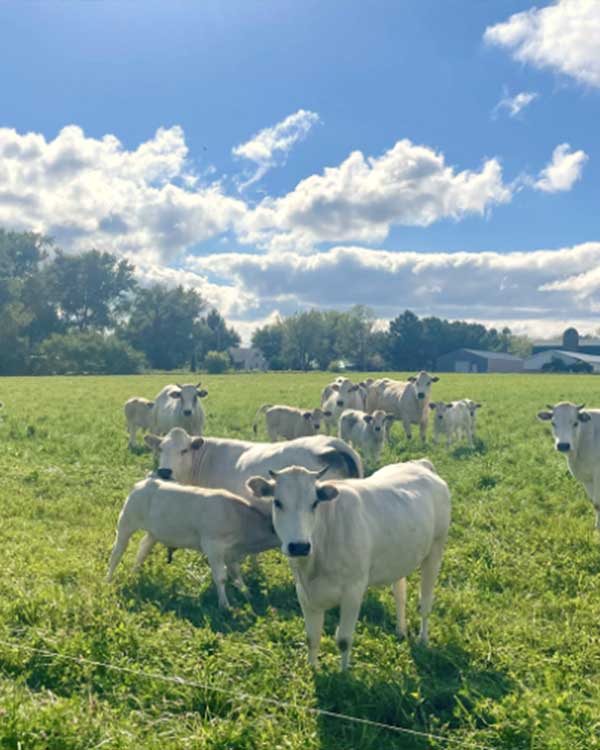
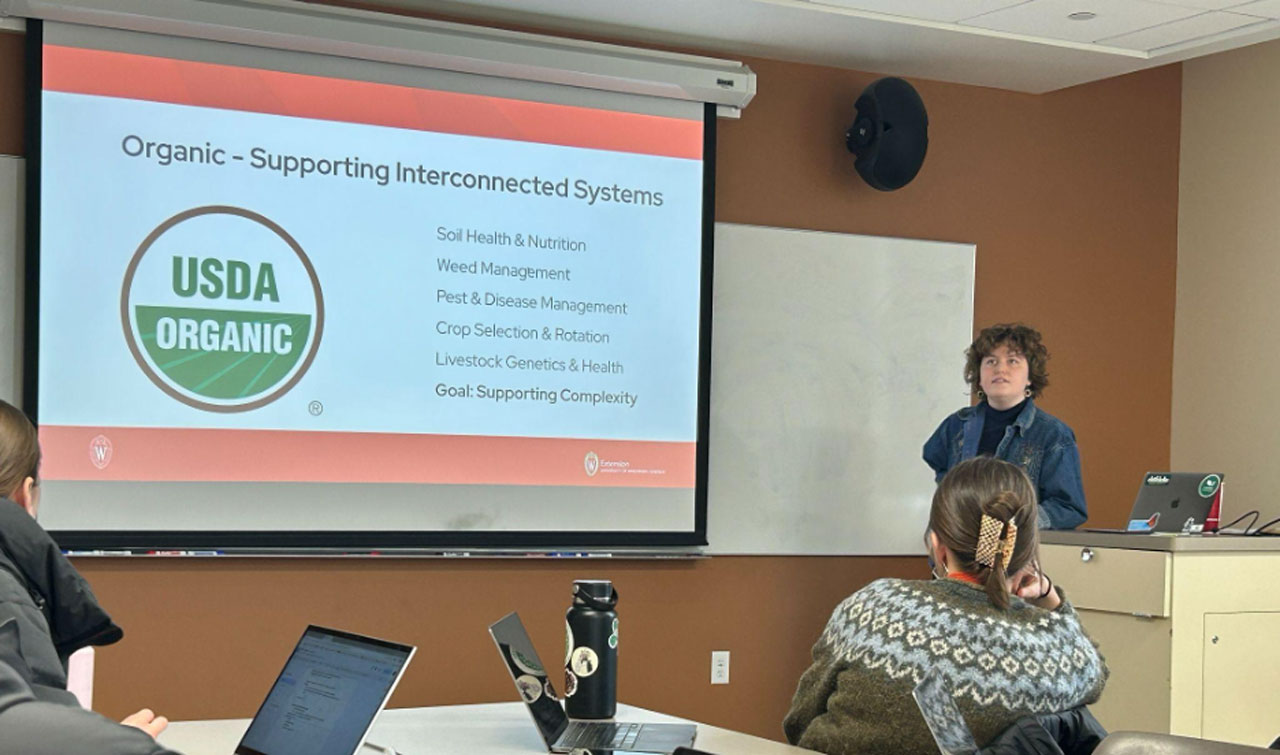
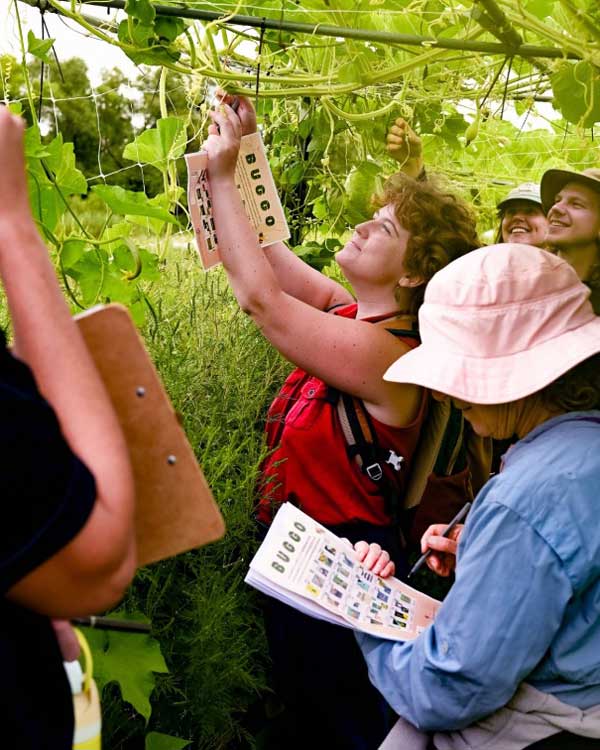
Over the past year, Ari has hosted and facilitated several events, including a field day focused on organic multi-species grazing, a conference panel discussion featuring organic dairy farmers and industry representatives, and a conference workshop, “The Organic Vegetable Growers Virtual Toolkit for Pest & Disease Management.” She attended and spoke about organic transition and production at a number of different events over the year, including integrated pest management workshops, webinars, and career conversations with the UW Organic Certificate course students. She has written and created several resources for growers, including the Organic Transition Resource Toolkit, articles on farming day-neutral strawberries organically and organic no-till soybean production, and both written and video tutorials for using the Vegetable Disease and Insect Forecasting Network, an online pest and disease risk forecasting tool that can provide valuable insights for organic vegetable growers.
Ari is looking forward to the year ahead, with goals to build out resources for Wisconsin’s organic fruit growers, inform and support new organic research priorities, and deepen connections with farmers and partner organizations across the state.