
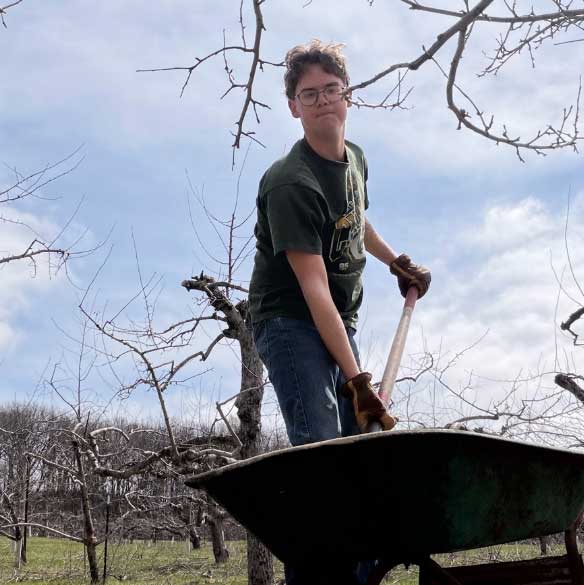
Student Spotlight: Meet Monroe Durand
Monroe Durand didn’t plan on ending up in agricultural pest management. He started at UW-Madison in Political Science, switched majors a few times, and eventually landed on Wildlife Ecology–mostly because he wanted to be outside and pursue something hands-on.
Monroe found his way into the Organic Certificate Program looking for real agricultural experience without committing to a full agronomy degree. That decision ended up leading him somewhere he didn’t expect: an independent study project centered on voles at Dorf Creek Orchard.
The connection came together fast. During a field trip for Organic Agriculture 367–a seminar course that includes site visits every other week–the class stopped at Dorf Creek Orchard, where owner Liz spent a solid ten minutes describing her frustration with the farm’s ongoing vole problem. Advisor Tom Bryan, familiar with Monroe’s wildlife ecology background, connected the dots in real time. Liz offered Durand the project on the spot.
It wasn’t Durand’s first brush with pest management; he’d spent two summers as student farm director at People’s Farm, dealing mostly with weeds and disease. Dorf Creek would be a different challenge entirely.
Durand’s core recommendation coming out of the project is about habitat, not traps: using existing unmowed strips on the property as corridors to draw weasels closer to the orchard’s vole-heavy zones.
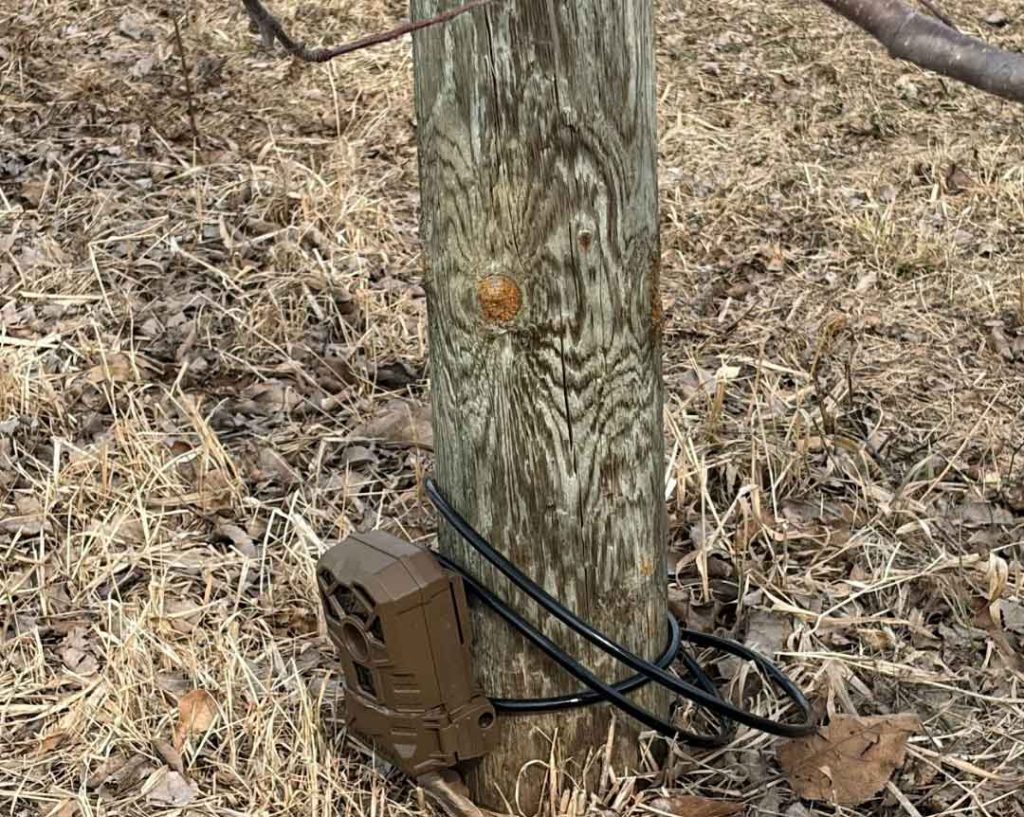
Beyond the vole project itself, Durand said the internship gave him a much deeper appreciation for how complicated diversified organic farming really is. Dorf Creek grows somewhere between 93 and 97 apple varieties, plus keeps a flock of sheep on the property–a level of diversity that makes even routine decisions more complex.
Durand credits the Organic Certificate Program directly for making the internship possible. Without the field trip built into Organic Agriculture 367, and without Tom Bryan and Katie Peterson’s support connecting students to real opportunities, he says this project simply wouldn’t have happened.
The experience has also shifted his career thinking. Durand’s increasingly drawn to pest management work, specifically the kind that lets him solve problems creatively while working directly with farmers. Since this interview, he has transitioned to a paid employee rather than a student researcher, continuing the vole work he started this spring.